Contents
1. Start with the Overall Layout: The Backbone of Your Efficiency
2. What Are the Core Devices?
3. What are the key points to consider when designing a production line?
Are you considering investing in the construction of a PET bottled water production line? Perhaps you have realized that with the continuous growth of global demand for bottled water, this is a market full of potential. However, you may also be concerned about how to ensure that the production line layout is reasonable, equipment selection is appropriate, and meets strict food safety standards? If the design is improper, it will not only affect production efficiency and product quality, but may also lead to additional costs and safety hazards. These questions are indeed headache inducing, but please rest assured that we will answer them step by step for you.
Designing a bottled water production line is not an easy task, but as long as you master the correct methods, you can definitely create an efficient, safe, and cost-effective production line. Firstly, you need to clarify the overall layout of the production line, then select suitable equipment based on production capacity requirements, and ensure that all designs comply with relevant regulatory requirements.
In this article, I will provide a detailed introduction to the overall layout planning, core equipment and their functions of the bottled water production line, as well as key considerations during the design process. By following these guiding principles, you will be able to avoid common design pitfalls and build a reliable and competitive bottled water production line for your business.
Start with the Overall Layout: The Backbone of Your Efficiency
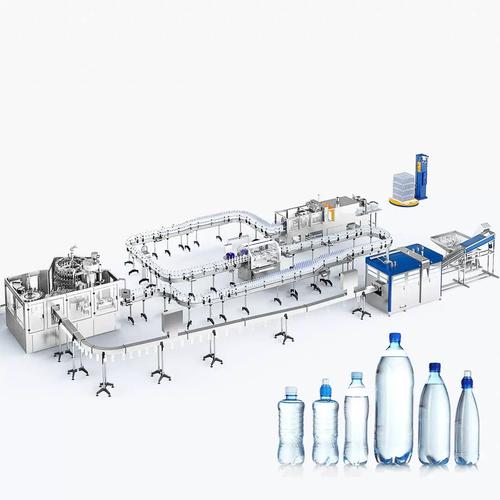
The layout planning of the production line is the first step in designing a bottled water production line and is also the most easily overlooked part. Many investors often only focus on the equipment itself in the initial stage but neglect the importance of the overall layout. A poor layout may lead to inefficient production processes, low efficiency in material handling, and even an increased risk of cross-contamination. For example, if the water treatment area and the filling area are not properly separated, it may affect water quality safety; if the equipment spacing is too small, it will cause great inconvenience in daily maintenance and cleaning. These problems will become hazards in the subsequent operation, so we must give sufficient attention during the planning stage.A reasonable layout for a bottled water production line should follow the principle of "one-way flow", ensuring that the production process follows a straight or U-shaped path from raw materials to finished products, avoiding cross-reversals.
Usually, the entire factory can be divided into several main areas: the water treatment area, the filling area, the packaging area, and the auxiliary facilities area.
The water treatment area should be close to the water source to reduce the transportation distance;
The filling area needs to be kept clean and should be as close as possible to the water treatment system to shorten the transportation pipeline;
The packaging area should be located after the filling area, facilitating the direct entry of finished products into the storage or shipping area.
In addition, consideration should be given to the personnel passage, material storage area, and potential future expansion space.
Through scientific planning of the layout, you can maximize production efficiency, reduce operating costs, and leave room for subsequent upgrades and renovations.
What Are the Core Devices?
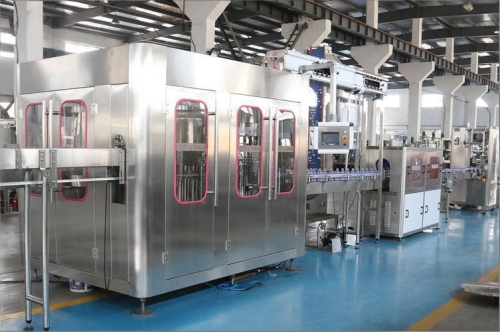
The bottled water production line consists of multiple key equipment, each of which plays an indispensable role. If the equipment selection is inappropriate or the functions do not match, the operation of the entire production line will be affected. For instance, choosing an unsuitable filling valve may result in insufficient filling accuracy, while lacking necessary sterilization equipment may pose food safety risks. These equipment issues can either reduce production efficiency or lead to substandard products and even recalls, causing significant losses to the enterprise. Therefore, it is crucial to understand the function of each core equipment and make the correct selection.Next, we will provide a detailed introduction to the main equipment in the bottled water production line and their functions:
1.Water Treatment System: Water treatment is the first step in the production of bottled water and is a crucial part to ensure the safety of water quality. A typical water treatment system includes raw water tanks, multiple media filters, activated carbon filters, softeners, precision filters, reverse osmosis (RO) devices, ultraviolet (UV) sterilizers, and ozone (O₃) generators. The raw water tank is used to store raw water. The multiple media filters and activated carbon filters can remove suspended solids, residual chlorine, and organic substances from the water. The softener is used to reduce hardness, and the precision filter further traps tiny particles. The reverse osmosis device separates water molecules from dissolved salts under high pressure, producing pure water. The ultraviolet sterilizer and ozone generator perform the final disinfection on the pure water to ensure that the microbial indicators meet the standards. These devices work together to purify ordinary raw water into pure water that meets drinking standards, providing a reliable water source guarantee for subsequent filling.
2.Bottle Preform and Blow Molding System: For water bottling lines that use PET bottles, a blow molding machine is usually equipped. The blow molding machine heats and stretches the pre-injected bottle blanks to form empty bottles. Modern high-speed blow molding machines can produce tens of thousands of bottles per hour and can match the speed of the filling machine. The blow molding system typically includes feeders, bottle blank heating furnaces, stretching and blow molding stations, and conveyor belts, etc. Through automated control, the blow molding machine can continuously and stably supply empty bottles to the filling line, reducing manual intervention and intermediate steps, and improving production efficiency.
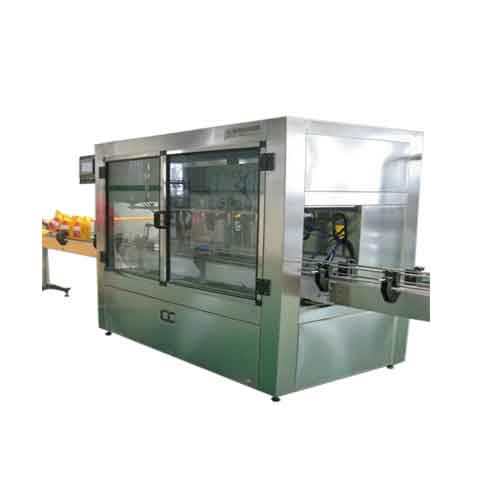
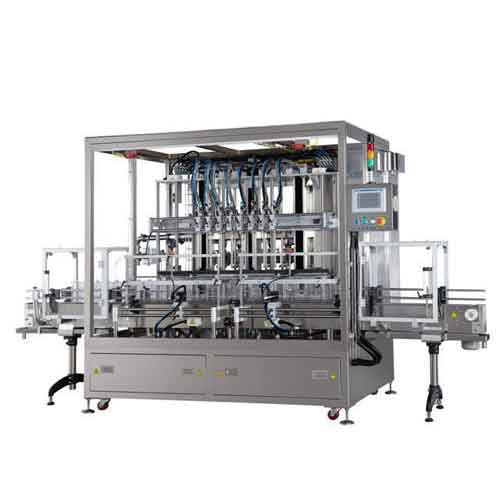
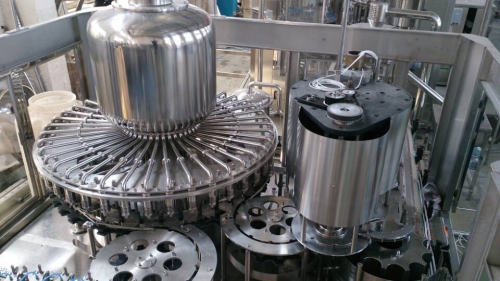
3.Filling Machine: The filling machine is one of the core equipment in the production line, used to quantitatively fill purified water into bottles. According to the degree of automation, filling machines can be divided into rotary type and linear type; according to the filling principle, they can be classified as gravity type, pressure type and vacuum type, etc. For pure water, the common practice is to use atmospheric pressure gravity filling, where the liquid flows into the bottle due to its own weight; for carbonated mineral water, equal pressure filling is required to prevent carbon dioxide from escaping. Advanced filling machines usually are equipped with high-precision flow meters or liquid level sensors to ensure the accurate filling volume of each bottle. At the same time, the filling machine also has an automatic rinsing function, which can rinse the inside of the bottle before filling to ensure the cleanliness of the filling environment.
4.Capping Machine: The capping machine is used to seal the bottle cap on the bottle mouth, ensuring that bottled water does not leak or be contaminated during transportation and storage. The common sealing methods include screw cap and capping, corresponding to different types of bottle caps such as plastic anti-theft caps and metal caps. The capping machine is usually operated in conjunction with the filling machine, synchronously conveying bottles through a conveyor belt to achieve the integration of filling and capping. A high-quality capping machine can ensure uniform sealing torque and tight sealing, effectively preventing bottle cap loosening or external pollution of water quality inside the bottle.
5.Post-packaging Equipment: Post-packaging equipment includes labeling machines, inkjet printers, cartoning machines, and palletizing machines, which are used to complete the final packaging process of bottled water. The labeling machine is responsible for attaching labels to the bottle body or bottle cap. The labels usually contain product information, production date, and batch number, etc. Modern labeling machines can simultaneously complete various processes such as sleeve labeling, heat shrink labeling, or adhesive label sticking. The inkjet printer is used to print production date, batch number, and other traceable information on the bottle body or label. The cartoning machine packs the bottles that have been filled and capped into boxes or turnover boxes according to the predetermined quantity, and the palletizing machine stacks the entire box of products on the pallet for convenient storage and transportation. These automated packaging equipment greatly improve the packaging efficiency, reduce manual operations, and ensure the consistency and hygiene safety of the packaging.
What are the key points to consider when designing a production line?
When designing and planning a bottled water production line, there are many details that need special attention. If these matters are ignored, various problems may arise during the production process, and even affect the success or failure of the entire project. For example, insufficient understanding of local regulatory requirements may result in the production line failing to pass the acceptance inspection; If the equipment layout is not reasonable, it may increase the difficulty of operation and pose safety hazards. These problems often only become apparent in the early stages of production, but rectifying them later will consume a lot of time and money. Therefore, fully considering these factors during the design phase is necessary to ensure the smooth operation and long-term stability of the production line.The following are several key considerations when designing a bottled water production line:
1.Regulations and Compliance: The food industry is subject to strict regulatory oversight, and bottled water is no exception. Before designing a production line, it is essential to understand and comply with the relevant regulations and standards of the target market. For example, in the United States, bottled water is classified as food and must comply with the FDA's Bottled Water Regulations and current Good Manufacturing Practices (CGMP). In Europe, it is necessary to comply with the EU Food Safety Regulations and related directives. Many countries also require companies to obtain HACCP Hazard Analysis and Critical Control Point system certification or ISO 22000 food safety management system certification. In addition, the source and quality of bottled water must also comply with national standards. When designing, it is necessary to ensure that equipment materials, pipeline layout, and clean area division meet regulatory requirements, in order to prepare for subsequent permit applications and inspections.
2.Capacity and Automation Level: The production capacity design of the production line should be matched with market demand and investment budget. If the capacity is too low, it may fail to meet market demand; if it is too high, it may result in idle equipment and waste of funds. Generally, small bottled water plants (such as those producing several thousand bottles per hour) can adopt semi-automatic equipment to reduce initial investment, while large plants (producing tens of thousands of bottles per hour) tend to prefer fully automatic high-speed lines to improve efficiency. When determining the production capacity, it is also necessary to consider the production capacity of the equipment and the balance between the preceding and subsequent processes. For example, the speeds of blowers, fillers, and packers should be as close as possible to avoid bottlenecks. Automation level is also a factor that needs to be weighed: fully automatic lines can reduce labor costs, but have higher initial investment and maintenance requirements; semi-automatic lines have lower investment but require more manual intervention. Based on one's own funds and operational strategies, choosing the appropriate level of automation is very important.

Figure 1: Comparison of Investment and Operating Costs of Different Scales of Bottled Water Production Lines
3.Equipment Selection and Compatibility: Choosing the right equipment is the key to a successful design. When selecting equipment, one should consider the performance, reliability, energy consumption, and maintenance costs of the devices comprehensively. Prioritize choosing suppliers with mature technology and a good reputation, and ensure that the equipment meets food-grade hygiene standards (such as using 304 or 316L stainless steel for contact components). Additionally, compatibility between different equipment and interface issues should be taken into account. For example, whether the conveyor belt height and speed of the filling machine match that of the capping machine, whether the water treatment system's production capacity can meet the peak demand of the filling machine, and whether the bottle type produced by the blowing machine is compatible with the fixtures of the filling machine, etc. Before purchasing equipment, it is best to have a thorough communication with the supplier, provide detailed process requirements, and have the supplier assist in the equipment layout and process design to ensure smooth connection of all equipment.
4.Factory Facilities and Utility Services: The operation of production lines cannot be separated from the complete support of factory facilities and utility services. During the design stage, it is necessary to consider whether the area, height, and load-bearing capacity of the factory building meet the requirements for equipment layout, as well as whether the ground is slip-resistant, has good drainage and ventilation. Bottled water production requires high cleanliness standards, and the filling workshop usually needs to reach a certain level of cleanroom. Therefore, a reasonable air purification system (such as a combination of primary, intermediate, and high-efficiency filters) and positive pressure maintenance measures should be designed. Additionally, utility services include power supply, water supply, gas supply, steam, and refrigeration. For example, reverse osmosis equipment requires stable power supply and raw water supply, blowers need compressed air, filling machines may need compressed air and vacuum, ozone generators need an oxygen source, and certain processes may require steam or cold water. During the design process, the maximum load of each equipment should be calculated to ensure that the power supply capacity is sufficient, the pipeline layout is reasonable, and a certain margin is reserved to cope with future expansion. At the same time, emergency measures should be considered, such as equipping backup generators to prevent power outages from affecting production.
5.Health and Safety: Food safety is the core of bottled water production. When designing the production line, the hygiene concept must be implemented to avoid any potential hazards that may contaminate the products. For example, the equipment layout should ensure a clear flow of raw water, semi-finished products, and finished products to avoid cross-contamination; the water treatment system and filling system should use as much closed-pipe transportation as possible to reduce exposure points; the filling area should be equipped with hygiene facilities such as air showers, changing rooms, etc., and strictly control the entry and exit of personnel. The equipment itself should also be easy to clean and disinfect, such as adopting rounded corners design, noblind spot welding, quick-opening interfaces, etc. In terms of safety, it is necessary to ensure that all moving parts have protective covers, the emergency stop buttons are distributed reasonably, and the electrical system meets explosion-proof and moisture-proof requirements. In addition, the working environment of the operators should also be considered, such as noise and temperature control in the control room, as well as ergonomic operation platforms and channels, to reduce labor intensity and accident risks.
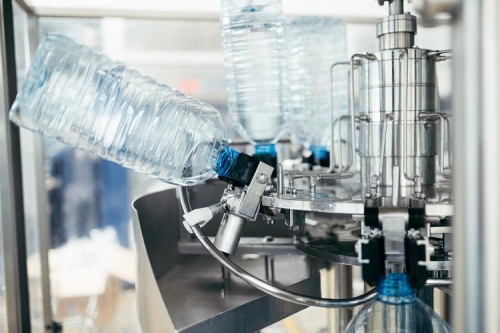
6.Quality Control and Traceability: Modern bottled water production lines should incorporate quality control (QC) and traceability systems. During the design process, detection points can be set up at key processes, such as installing online turbidity, pH, and conductivity meters in the water treatment stage to monitor water quality in real time; configuring weight detection or liquid level detection in the filling stage to eliminate bottles with insufficient or excessive filling; and setting bottle cap torque detection and sealingity detection after sealing to ensure that each bottle product is qualified. At the same time, a manufacturing execution system (MES) or a simple data collection system can be introduced to record the production data of each batch of products (such as raw water batch, filling time, operators, etc.), achieving quality traceability from the source to the finished product. These measures not only help to improve product consistency but also enable quick identification of the cause in case of problems, reducing losses.
7.Future Expansion and Flexibility: The market is constantly changing, and enterprises may introduce products of different specifications or types. Therefore, when designing the production line, it is necessary to have a certain degree of foresight and flexibility. For example, reserve some workshop space for future expansion of equipment or the introduction of new production lines; choose modular-designed equipment to facilitate future capacity upgrades or the addition of functions; consider the possibility of multi-product co-line production, such as producing bottles of different capacities or different types of water (pure water, mineral water, soda water, etc.) by replacing a few components. When designing the control system, interfaces can also be reserved to facilitate the introduction of more advanced automation or information systems in the future. Although this forward-looking design may require a slightly higher initial investment, in the long run, it can save renovation costs and enable the enterprise to respond quickly to market changes.
In conclusion, designing a bottled water production line is a comprehensive project that requires considering various factors such as process, equipment, regulations, and safety. Through meticulous planning and layout, correct equipment selection, and the emphasis on the aforementioned key matters, you will be able to create an efficient, safe, and competitive bottled water production line. In the fierce market competition, a well-designed production line will become a solid foundation for your enterprise's development, helping you establish a firm foothold in the bottled water industry and achieve continuous growth.
Union Machinery has been engaged in food machinery customization services since its establishment in 2014, according to customer needs for you to tailor suitable machinery and equipment, for more product information, please refer to: Bottled Water Filling Machine;More video information see view: Bottled Water Production Line、Pure Water Production Line; Our expertise and advantages will bring you more opportunities and development space.
For personalized, industry-tailored advice and to explore state-of-the-art solutions, please don't hesitate to contact us at info@unmachinery.com
The following is other knowledge related to Bottled Water Filling Production Line that I have summarized based on long-term work experience, for your reference. I hope it will be helpful to you.
1.How is PET bottled purified water filled?
2.What Are the Advantages of 3-in-1 Bottled Water Filling Machines?
3.What Are The Common Faults of 3-in-1 Bottled Water Filling Machine?
Product List
HOT PRODUCT